
Hard Customer Requests and Book Matching
This is the part of Tiny Bookshop that makes smart players feel cursed. The request sounds obvious, you hand over a book that seems perfect, and the customer reacts like you offered them wallpaper paste.
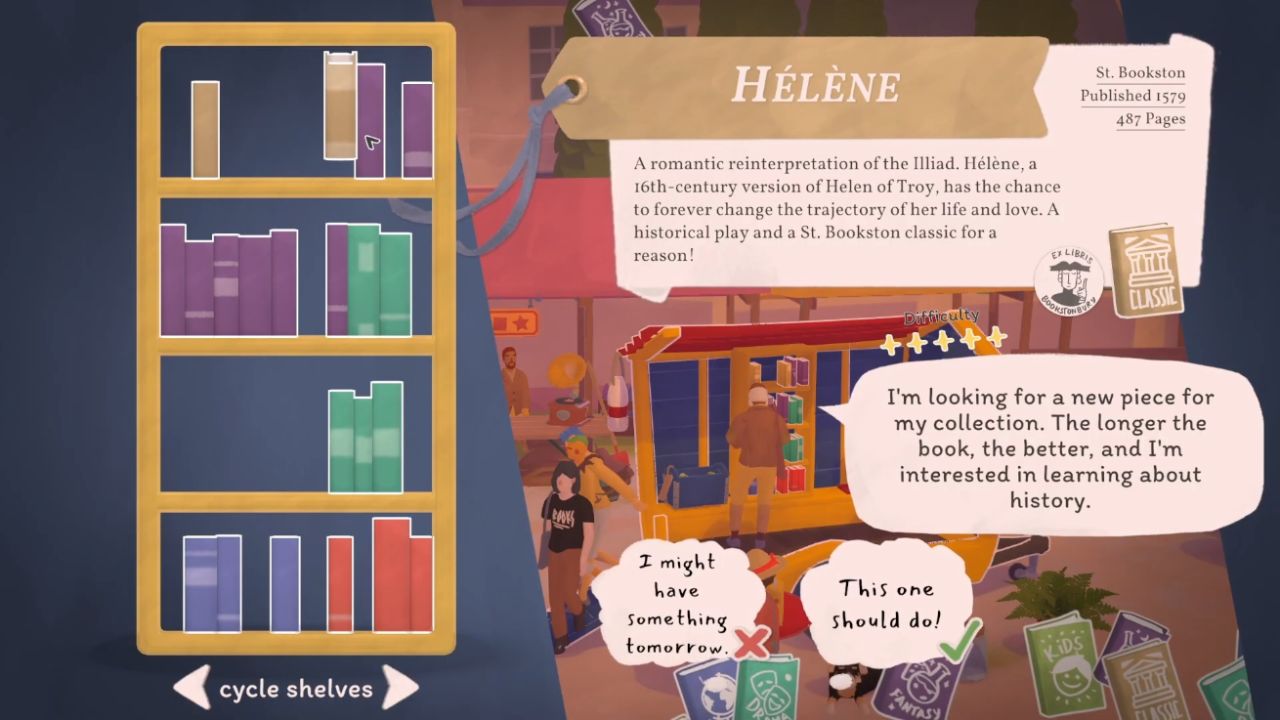
The fix is usually not to search harder. It is to translate the request more literally. When a request still feels slippery, the book finder gives you a fast way to test genre and quality combinations before you waste another customer interaction.
Requests That Commonly Trick People
- Female author: this is a real requirement, not a bonus. A perfect genre match still fails without it.
- Horror: mystery and thriller are not the same thing. If they want scary, give them scary.
- Kids books: child-friendly matters more than genre overlap. A mature fantasy still fails here.
- Non-fiction: travel, biography, and fact can overlap, but not every historical or academic-sounding title counts.
- Long books: aim for 700 pages or more when the request sounds serious about length.
- Short books: think under 200 pages unless another trait is clearly stronger.
Useful Translations
- Historical: often wants fact or travel more than simply an old novel.
- Romance: can be satisfied by books with a strong romantic thread, not only pure romance shelves.
- Nature: usually leans toward nonfiction and factual books.
- Biography: memoirs and autobiographies can count.
- Series: later volumes usually still count, but obvious series labeling is safer.
- Fantasy without magic: look for strange or gothic flavor without obvious spellcasting or sci-fi energy.
How To Read Strong Wording
- "I need" and "I won't leave without" usually beat softer preferences.
- If the request sounds contradictory, satisfy the part they sound most intense about.
- Never recommend the exact book they say they already like. That usually counts as a miss.
Fast Fixes For Famous Problem Prompts
- "Written by a woman": start with female author first, then solve the genre.
- "Kid-friendly and educational": think Kids plus Fact, not just one of the two.
- "Gripping": choose tension and pace, not just any crime label.
- "Scary": choose Horror, not a mild mystery.
- "700-page commitment": high six hundreds are risky. Go truly long.
Tip: Keep a few utility books around that solve awkward combinations: female-author nonfiction, kid-friendly fact, long fantasy, short mystery, and genuine horror.
Bottom line: Hard recommendations get easier when you stop thinking in shelves and start thinking in tag combinations.
Comments will load when you reach this part of the walkthrough.