
How Do You Build a Consistent Deck and When Should You Skip Cards?
TL;DR: In Slay the Spire 2, a consistent deck does one clean job well in the first shuffle: it blocks the scary turn, deals enough damage to stay ahead, and reaches its best cards often. If a reward does not fix a real problem right now or make an engine you already have better, skip it.
- Fast deck goal: add a little early damage, a little early block, then one scaling plan for long fights.
- Sample opening turns: Turn 1, spend energy on the line that saves the most HP while still pushing damage. Turn 2, use cheap cards and draw to stay flexible. Turn 3, once the fight is stable, play your scaling piece instead of panic-dumping random cards.
- Easy skip rule: if a card is only good in a dream draw, only good in one matchup, or needs support you do not have yet, leave it.
You know this loss. Reward screen pops, every option looks spicy, and five rooms later your deck plays like a backpack full of loose cables. You draw setup with no payoff, payoff with no setup, and your supposed high-roll run gets folded by a very normal enemy. That is not always RNG being a little goblin. A lot of the time, it is deck bloat. The fix is plain: build a small machine first, then add the nonsense after the machine can actually start.
That is also where the fun lives. The dream is not just to survive. It is to build a monster deck from scraps, hit that sweet first shuffle, and feel the run click into place like, yes, this pile absolutely knows what it is doing. Short runs, weird lines, repeat attempts, sudden synergies. That is the juice. Consistency is how you get to the good part more often.
What consistency actually means
Consistency means your deck does its job before the fight gets weird, not only when the stars line up. A payoff card is a strong card that gets much better with support. An engine is the package that makes that payoff show up and work often enough to matter. A relic is a passive item with a built-in effect that changes how your run or combat works. New players usually lose value by drafting payoff before engine. Flip that. Take cards that stand on their own first, then take the card that becomes great because your deck now supports it.
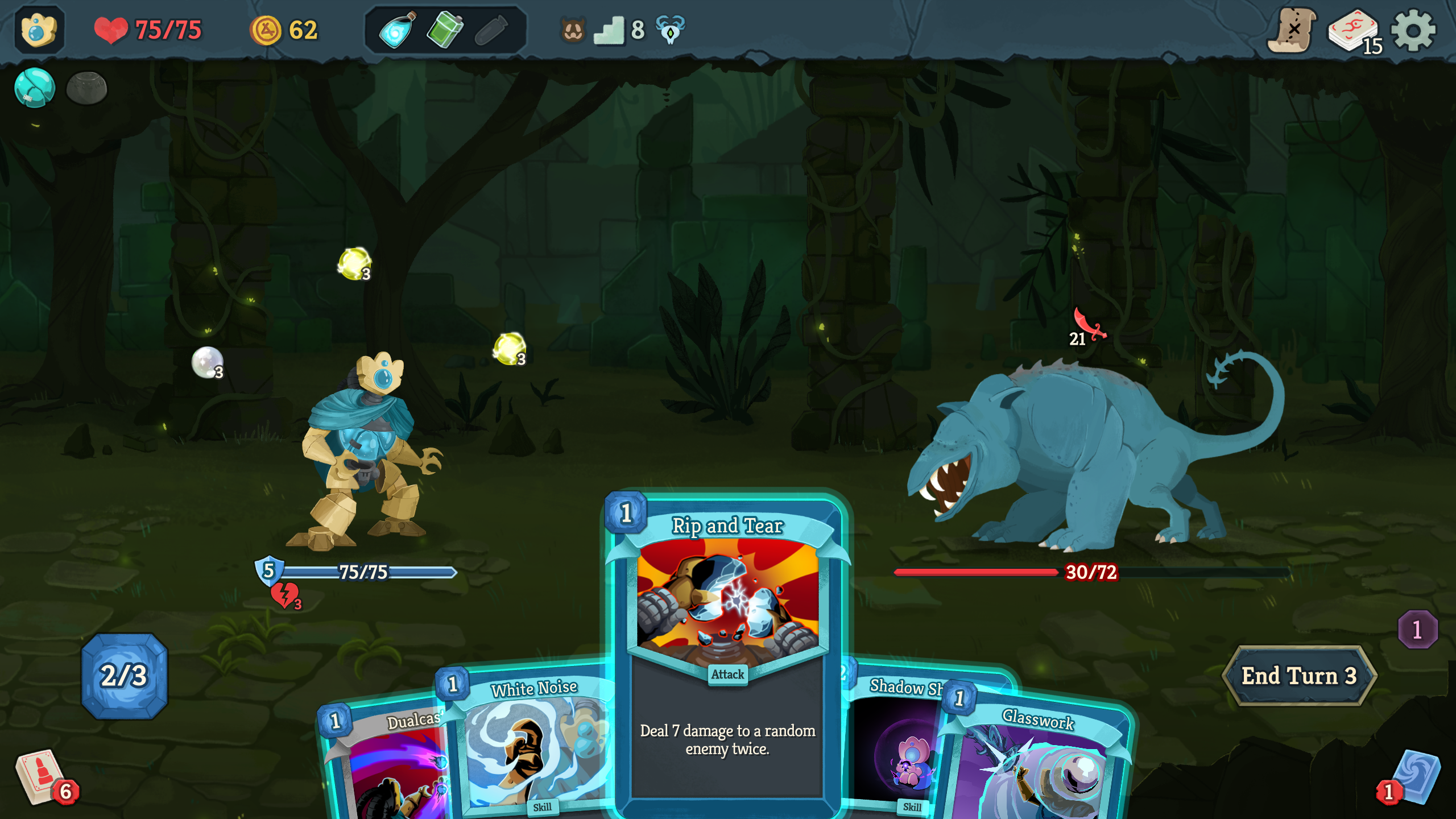
- Take a card when it fixes one of three jobs: early damage, early block, or scaling for long fights.
- Skip a card when it overlaps with a job you already do well and does not improve draw quality or your main plan.
- Prefer boring live cards over cute dead cards. A card that works on most turns is usually worth more than a flashy card that misses half the time.
When skipping is correct
Skip is not the "I give up" button. It is the "my deck has standards" button. If your last few fights were rough because you took too much damage early, do not draft a slow combo piece just because it has ceiling. If hallway fights are already easy, do not stuff in more medium attacks that only push your best block, draw, or scaling cards deeper into the pile. A lean deck sees its best cards more often. That is expected value math, not wizardry.
Before every reward, ask one rude little question: What bad draw does this card replace? If the answer is "none, but it might pop off later," that is usually a skip. You are not ranking cards for a tier list. You are grading the next few floors.
A simple draft filter
- Early floors: take efficient cards that help right away. Your deck needs to survive normal fights before it earns the right to cosplay a combo video.
- Mid-run: once early damage and block feel stable, slow down. Add draw, energy help, scaling, or cards that clearly fit your best synergies.
- Before bosses and elites: draft for the problem in front of you. If a fight will punish a slow start, take cheaper defense and faster setup. If it will go long, take scaling instead of more small damage.
If the run already feels messy
If RNG kicked your shop, your rewards were awkward, and the deck feels like soup, recover by drafting for the next three fights only. Take the card that is live on most turns. Buy card removal when you can so weak starter cards stop clogging key hands. If your HP is low enough that one bad draw ends the run, defend the run first and rest instead of forcing greed. That repair line is not glamorous, but it gets you back to seeing your real payoffs before the run turns into a slapstick bit.
As of March 8, 2026, this is Early Access advice, so exact balance will move. The core rule should not: if a card does not help now, or does not clearly make your current engine better, skipping it is often the strongest pick on the screen.
Comments will load when you reach this part of the walkthrough.