
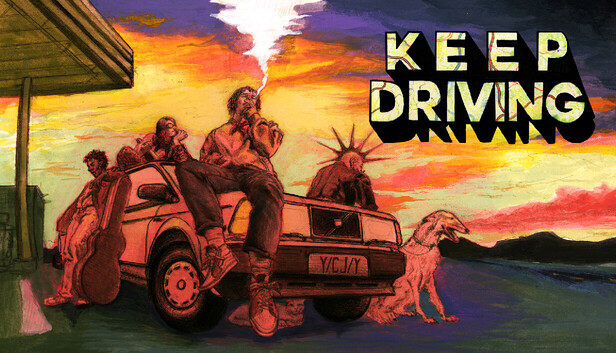
What to Do When You Run Out of Fuel or Break Down
When Keep Driving leaves you stranded, check these six things in order before choosing a recovery action:
- Fuel: Check the fuel gauge. An empty tank needs fuel.
- Durability: Check the vehicle's condition. A wrecked car needs repair.
- Energy: Check your driver's stamina. An exhausted driver needs rest or an item that restores energy.
- Cash: Note what you can spend on recovery and what will remain afterward.
- Carried supplies: Open your inventory. Look for fuel, repair supplies, or food and drinks whose descriptions restore the resource you need.
- Recovery choices: Select the stranded car to open its menu. Inspect the available actions, their costs, and any warnings before activating one.
The next stop looked close enough. Then the long road ate your last fuel, and your useful skills ran dry before the tank did. Start with the empty resource, then check whether the fix will drain another one. A walk for petrol is no help if you cannot afford it or stay awake afterward.
Find the action that matches your problem
Look for these labels and icons in the car menu. Check each action's description before using it; an icon alone does not mean you can afford the action.
| Menu action | What to check first |
|---|---|
| Trunk icon | Whether a carried item restores the depleted resource and can be used now. |
| Rest — pillow icon | The energy benefit, durability cost, and any time shown. |
| Walk — fuel-can icon | The energy and cash needed to fetch fuel. |
| Call Tow Truck — lift icon | The cash requirement and any restrictions or outcome described. |
| Call Parents — phone icon | Any eligibility message, chance of help, or warning shown. The call can fail and end the trip. |
Out of fuel: check your supplies, then Walk
- Open the trunk and inspect any carried Jerry Can, a container of spare fuel. If it still contains fuel, use it and check the fuel gauge again.
- If you have no usable fuel, inspect Walk. This action fetches petrol at the cost of energy and cash.
- Compare both costs with your remaining resources. If either requirement is unmet, check another available recovery action.
- If you can pay both costs, activate it. Afterward, check fuel, energy, and durability before selecting Keep Driving.
Tip: If low energy blocks walking, first check for a carried item that restores energy. Rest may also help, but only if the car can spare the durability it costs. Refilling the tank while leaving the driver exhausted still leaves you stuck.
Damaged car: repair supplies or Call Tow Truck
If durability is depleted, adding fuel will not solve the breakdown. Inspect any carried toolbox or repair item and read its use requirements. Use a repair item that still has uses left, then check the resulting durability before trying to resume.
- If you cannot repair the car with your supplies, inspect Call Tow Truck.
- Check the cash requirement and any restrictions in the description. Towing can repair the car and take you back to the previous stop; read any destination or outcome shown before committing.
- Activate towing only when it is available and affordable.
- After recovery, check all three resource bars. At a stop, inspect the services actually present before spending your remaining cash.
A tow can get a struggling journey moving again, but do not budget around a fixed fee or assume the stop has every service you need. Check what you can afford now.
Exhausted driver: restore Energy without wrecking the car
- Check carried food and drinks for an energy-restoring effect. Read the description before using one.
- If you need Rest, inspect its durability cost and any time shown.
- Rest only when the action is available and the car can pay that cost without leaving you with another depleted resource.
- Check energy, durability, and fuel again before resuming.
The useful order depends on what remains. A driver with no energy and a badly damaged car should check supplies before sleeping. If a repair item is available, repairing first may make rest possible. Do not repeat Rest without checking the car between uses.
Contacting parents: help with a chance of ending the trip
Your starting relationship with your parents affects the chance of emergency help. Do not treat a good relationship as a guaranteed rescue. Your starting kit also shapes your item fixes: My Tools includes a toolbox and a Jerry Can, while other kits have different supplies. Check what you actually packed and what still has uses left. If the current menu names a starting choice as the reason an action is unavailable, treat that restriction as part of this run.
- Check usable supplies and other affordable recovery actions first.
- Inspect Call Parents. Read any requirements, chance, or warning shown; do not assume the menu will spell out every consequence.
- If you accept the risk of ending the trip, make the call. Successful help can let the journey continue; afterward, check what was restored and where you are.
Calling home is a practical choice, but it can end the current trip if the call fails. Some stranded situations have no successful recovery left.
Spoiler: unsuccessful parental rescue
If your parents do not answer the emergency call, the trip ends with the Failure ending.
After recovery: prepare for the next road
Before setting off, take a moment to protect the summer you are building with this car and its unlikely crew.
- Fuel: Refill when an available service or supply allows it. Check the next road's visible travel information.
- Durability: Address damage before a long stretch or another rest in the car.
- Energy: Restore stamina and check status effects, the temporary conditions affecting your driver.
- Cash: Keep money for the next urgent service before buying optional clutter.
- Skills and items: Check remaining skill uses. Put usable encounter equipment in the glovebox, the item slots used during road events.
- Route: Inspect reachable stops and their visible services. Choose a road that fits your weakest resource; an unknown service farther ahead is still a gamble.
Comments will load when you reach this part of the walkthrough.